
Hereon Celebrates 70 Years of Research
Nearly 300 guests gathered at the Hamburg Chamber of Commerce on 18 November to celebrate the “birthday” of Helmholtz-Zentrum Hereon. Founded in 1956 as the Gesellschaft für Kernenergieverwertung in Schiffbau und Schiffahrt (GKSS), the centre was later renamed Helmholtz-Zentrum Geesthacht (HZG) – Zentrum für Material- und Küstenforschung. Since 2021, it has carried the name Helmholtz-Zentrum Hereon. Speakers highlighted that the centre has successfully reinvented itself several times over the decades and stressed that this ability to adapt remains essential for addressing the major challenges of our time. In doing so, Hereon has set the right course toward a future of meaningful impact.
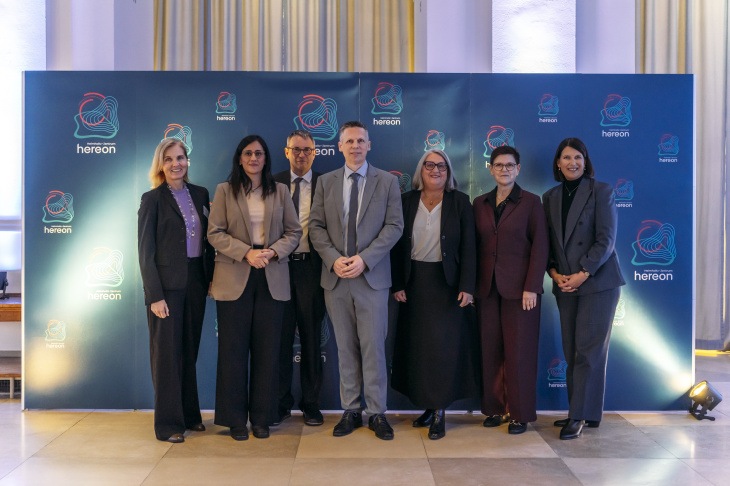
Participants in the stage programme (from left to right): Kathrin Haug (Vice President of the Hamburg Chamber of Commerce), Maryam Blumenthal (Hamburg Senator for Science), Peter Hassenbach (Federal Ministry of Research, Technology and Space, BMFTR), Prof Oliver Zielinski (Scientific Managing Director of Hereon), Dr Dorit Stenke (Minister for Science of Schleswig-Holstein), Elisabeth Gerndt (Administrative Managing Director of Hereon), and Sabine Helling-Moegen (Managing Director of the Helmholtz Association). Photo: Hereon/Jewgeni Roppel
Nearly 300 guests gathered at the Hamburg Chamber of Commerce on 18 November to celebrate the “birthday” of Helmholtz-Zentrum Hereon. Founded in 1956 as the Gesellschaft für Kernenergieverwertung in Schiffbau und Schiffahrt (GKSS), the centre was later renamed Helmholtz-Zentrum Geesthacht (HZG) – Zentrum für Material- und Küstenforschung. Since 2021, it has carried the name Helmholtz-Zentrum Hereon. Speakers highlighted that the centre has successfully reinvented itself several times over the decades and stressed that this ability to adapt remains essential for addressing the major challenges of our time. In doing so, Hereon has set the right course toward a future of meaningful impact.
A History of Transformation
In her keynote address, Dr Dorit Stenke, Schleswig-Holstein’s Minister of Science, highlighted Hereon’s history of continual transformation and pledged ongoing support for the centre in its home state. Maryam Blumenthal, Senator for Science of Hamburg, used the example of an ant preserved in amber to illustrate how Hereon’s research makes the invisible visible. At the measurement stations operated by Hereon at the Deutsches Elektronen Synchrotron DESY beamlines, researchers used synchrotron radiation to determine that the specimen belonged to a previously unknown and now extinct species. It has since been named †Desyopone hereon gen. et sp. nov. - after the two Helmholtz Centers where it was discovered.
Minister Stenke also traced the development of Hereon over the decades. In its early years, the focus was on the peaceful use of nuclear energy, including the construction and operation of the research reactor. A landmark project during this period was the German nuclear-powered vessel OTTO HAHN, which undertook research and commercial voyages between 1968 and 1979 using a nuclear reactor as its propulsion system. The project was scientifically managed by GKSS.
Future Perspectives with Heart and Mind
During the “Future Talk,” Prof Oliver Zielinski, Sabine Helling-Moegen, Managing Director of the Helmholtz Association, and Peter Hassenbach, Ministerial Counsellor at the Federal Ministry of Research, Technology and Space (BMFTR), took to the stage to discuss Hereon’s achievements, its current initiatives, and its ambitions for the future. The discussion highlighted the research vessel CORIOLIS, which combines materials, coastal and climate research in a floating laboratory powered by hydrogen propulsion. Also featured was the practical application of Hereon’s membrane technologies for carbon capture in the cement industry. The panel further emphasized Hereon’s expertise in implant research as well as its work on developing digital twins of complex systems. The conversation concluded with a discussion of research funding and scientific security in a time of global challenges. The panel agreed that Hereon’s strategy sets the right course and expressed confidence that key milestones will have been achieved by the time the centre celebrates its 75th anniversary.
Guests from the worlds of politics and business stressed the importance of ensuring that basic research and scientific experimentation lead to tangible societal and economic benefits. Henri Schmidt, CDU-Member of the German Bundestag for the constituency of Herzogtum Lauenburg – Stormarn Süd, where Hereon’s Geesthacht campus is located, noted that this impact can be clearly demonstrated through successful spin-offs and technology transfer activities.
Celebrating Together and Looking Ahead
Following the stage programme, Hereon researchers gave guests an insight into the projects they are currently working on. Thematic exhibition areas featured exhibits and presentations on technical systems for climate resilience, the sustainable development of coastal systems, and implants for personalised healthcare. Visitors gained a vivid impression that research is not only about formulas and laboratories, but also about the people whose expertise, creativity, and dedication bring it to life every day.
Cutting-edge research for a changing world
Helmholtz-Zentrum Hereon`s scientific research aims at preserving a world worth living in. To this end, around 1000 employees generate knowledge and research new technologies for greater resilience and sustainability - for the benefit of the climate, the coast and people. The path from idea to innovation leads through a continuous interplay between experimental studies, modeling and AI to digital twins that map the diverse parameters of climate and coast or human biology in the computer. This is an interdisciplinary approach that spans from the fundamental scientific understanding of complex systems to scenarios and practical applications. As an active member of national and international research networks and the Helmholtz Association, Hereon supports politics, business and society in shaping a sustainable future by transferring the expertise it has gained.
Impressions of the ceremony
-
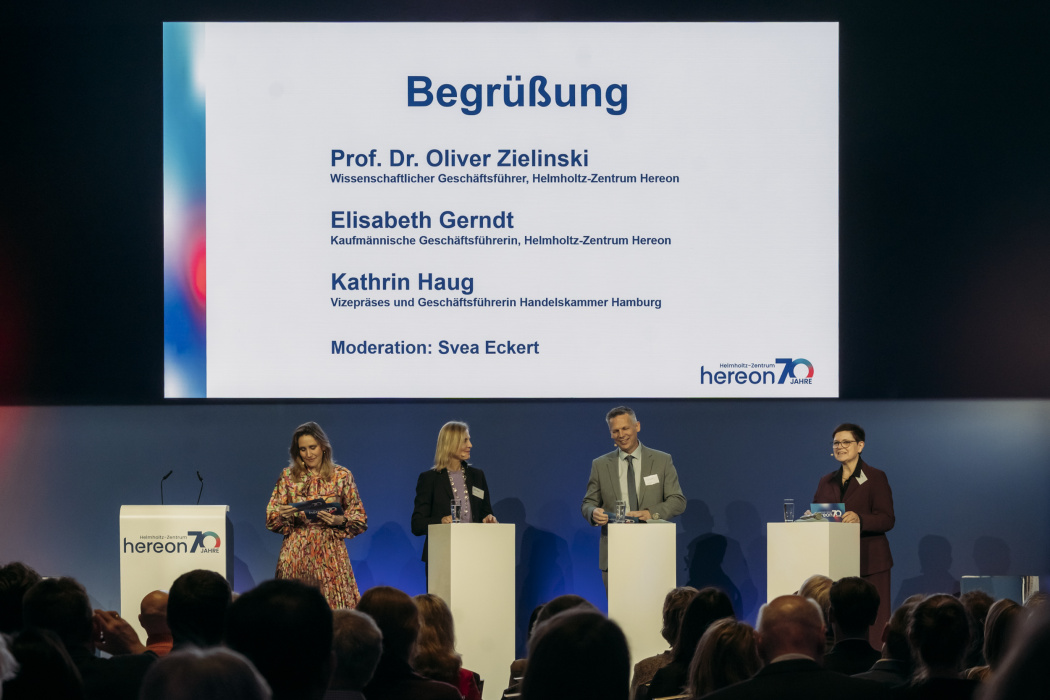 A warm welcome set the tone for a celebratory evening. Photo: Hereon/Jewgeni Roppel
-
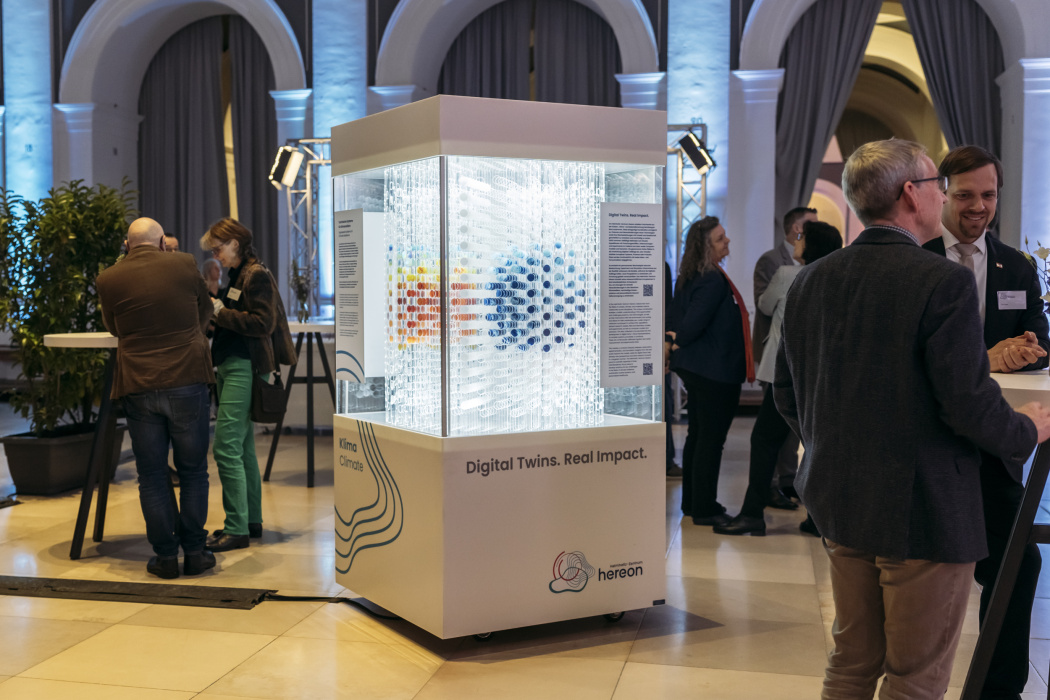 Exhibits and themed displays offered guests insights into Hereon’s research. Photo: Hereon/Jewgeni Roppel
-
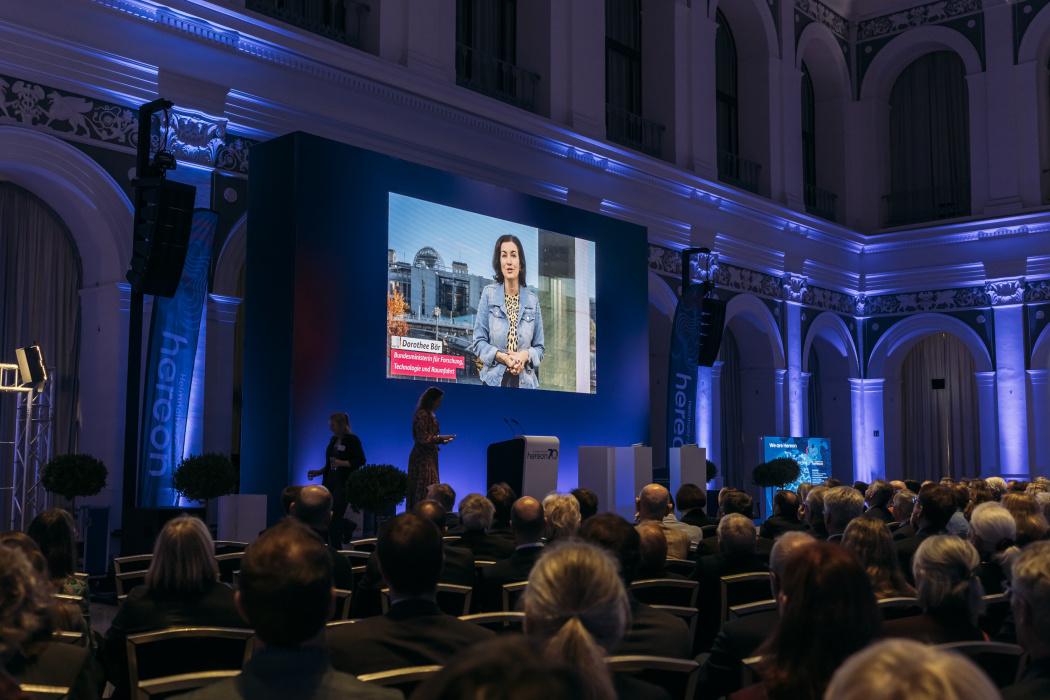 A video message from Federal Minister of Research Dorothee Bär underscored the appreciation for Hereon and its achievements. Photo: Hereon/Jewgeni Roppel
-
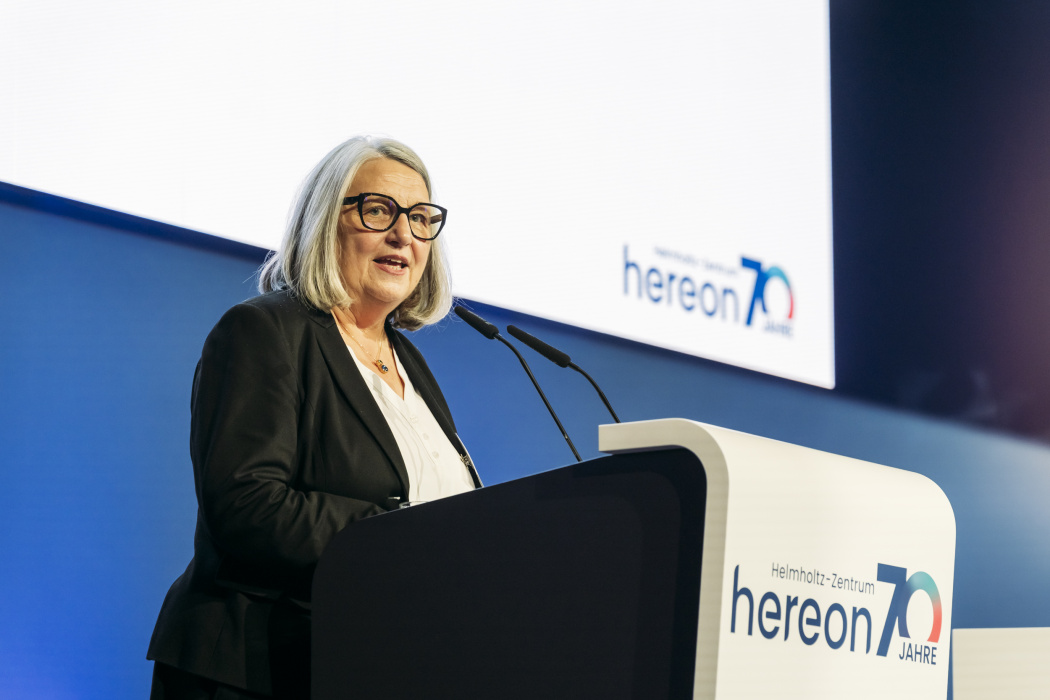 Schleswig-Holstein’s Minister for Science, Dr Dorit Stenke, reflected on the research centre’s eventful history. Photo: Hereon/Jewgeni Roppel
-
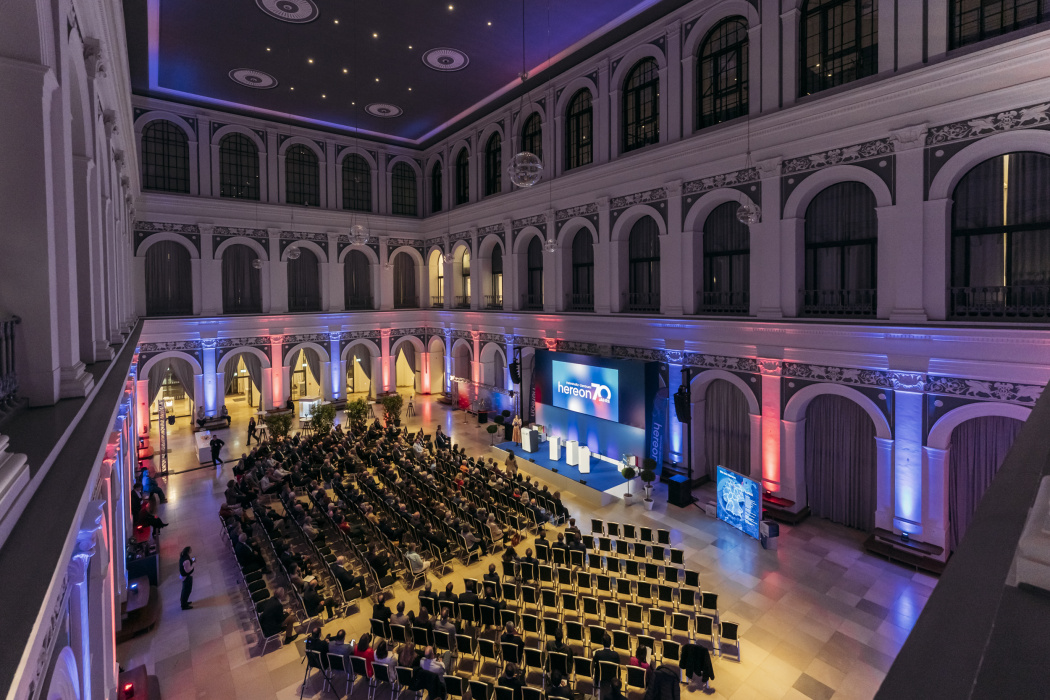 Nearly 300 invited guests attended the anniversary celebration. Photo: Hereon/Jewgeni Roppel
-
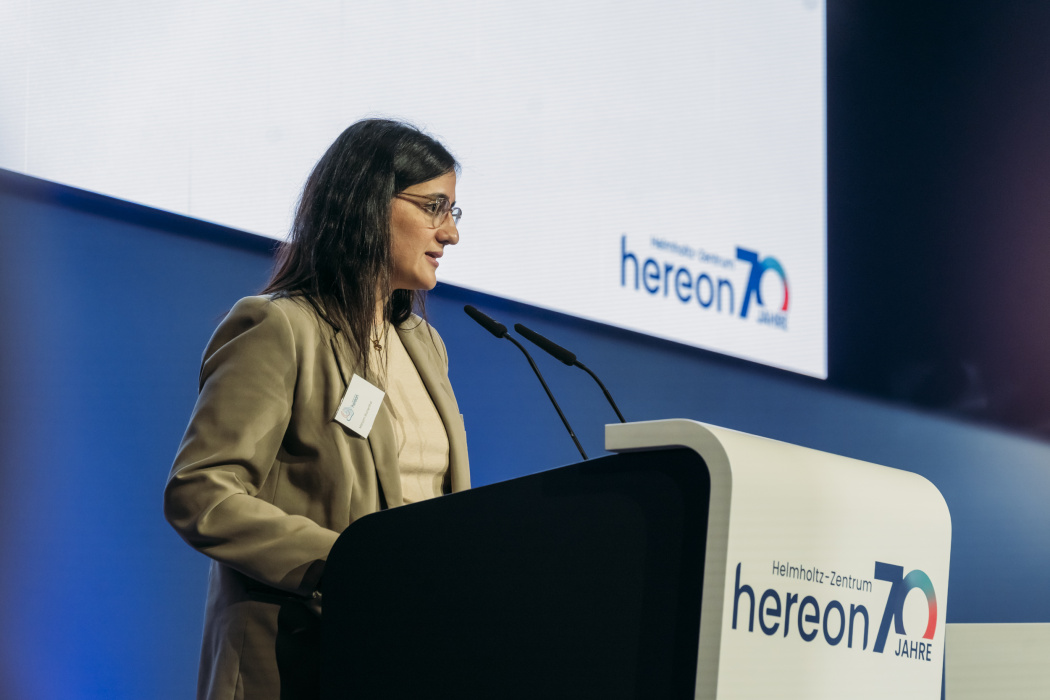 Hamburg’s Senator for Science, Maryam Blumenthal, spoke about collaboration that extends beyond state borders. Photo: Hereon/Jewgeni Roppel
-
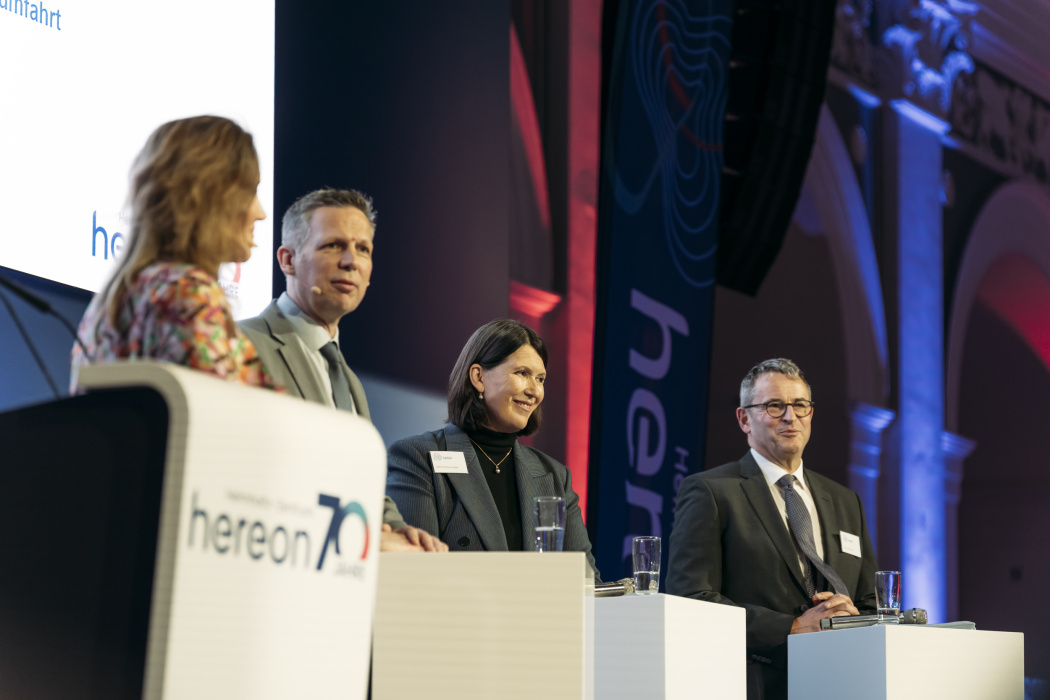 During the “Future Talk,” Prof Oliver Zielinski, Sabine Helling-Moegen and Peter Hassenbach discussed Hereon’s achievements and future ambitions. Photo: Hereon/Jewgeni Roppel
-
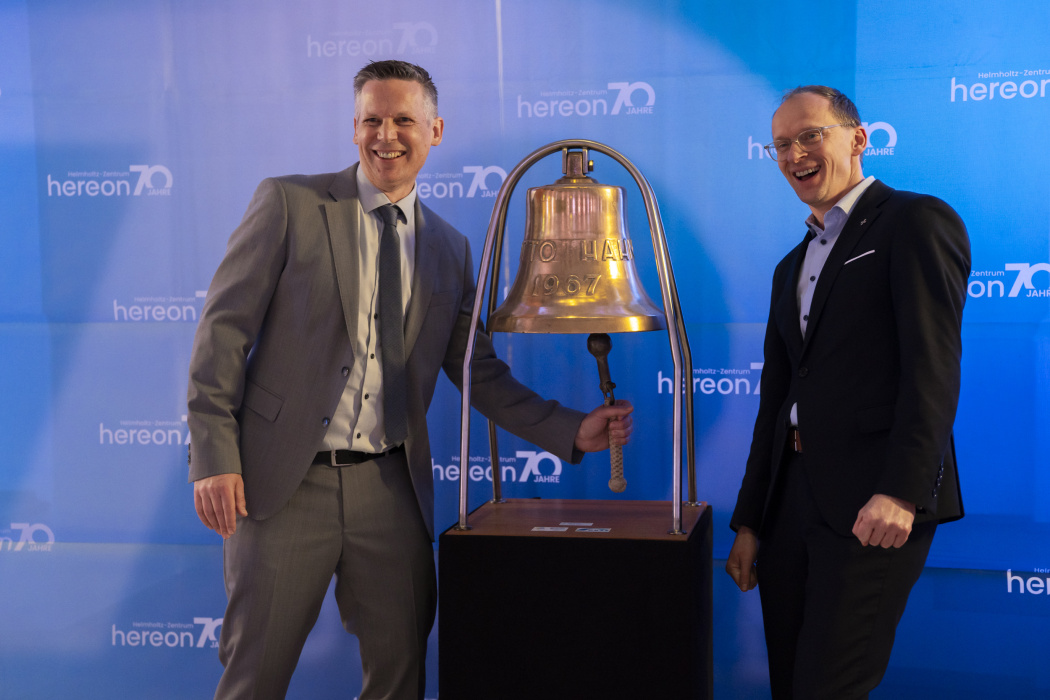 Hereon’s Scientific Managing Director, Prof Oliver Zielinski, and Member of the German Bundestag Henri Schmidt (CDU) rang the bell of the OTTO HAHN. Photo: Hereon/Jewgeni Roppel
-
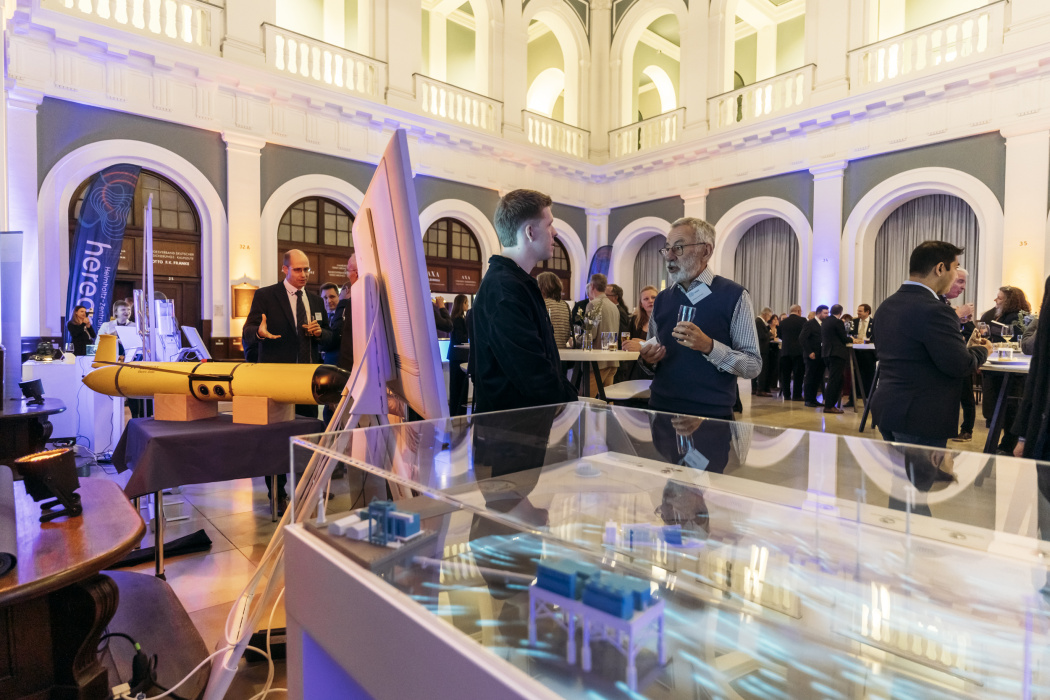 Many of the conversations following the stage programme focused on Hereon’s current research activities. Photo: Hereon/Jewgeni Roppel
-
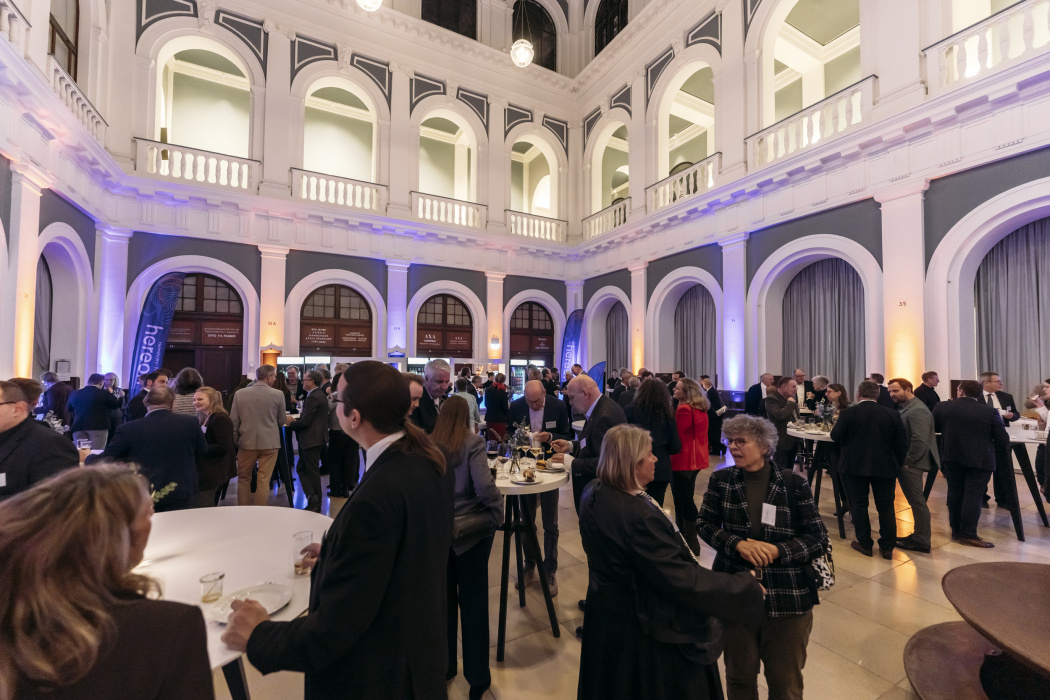 Guests rounded off the evening at the Hamburg Chamber of Commerce. Photo: Hereon/Jewgeni Roppel